
New to Medicare? Your plain-English guide to enrolling at 65.
Medicarelism is a free, independent resource built by a licensed Medicare agent. Your enrollment window is 7 months long, and it's easy to miss. Take the 2-minute Readiness Check and we'll send you a plan built around your situation — plus the official Medicare & You 2027 handbook.
- Licensed & independent agent
- No cost, no obligation
- Not a government website
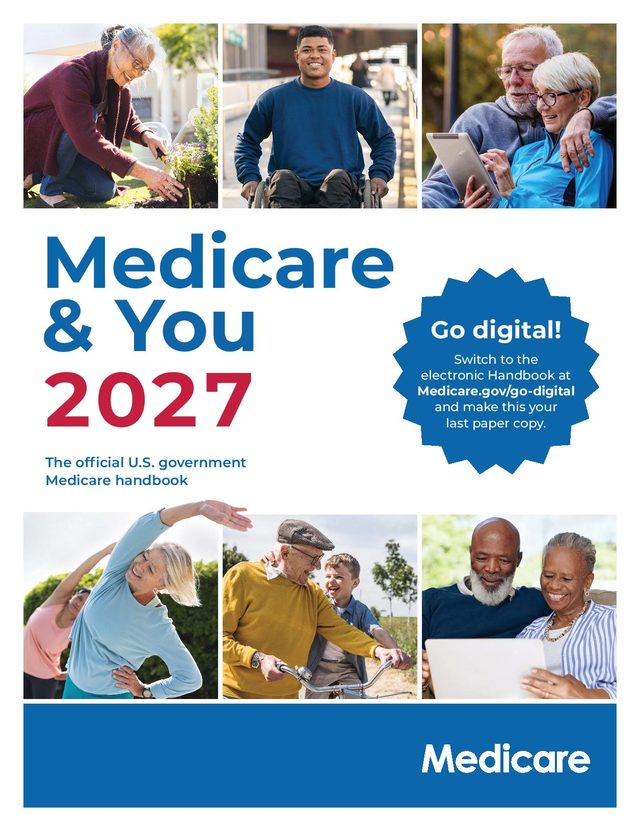
Medicare & You 2027
The official CMS handbook, sent to your inbox instantly.
Medicare Readiness Assessment
Medicare in plain English
Medicare is made of a few separate "parts." Here's what each one does, in the order most people meet them.
Hospital coverage
Pays for hospital stays, skilled nursing care after a hospital stay, and hospice. About 99% of people pay no monthly premium for Part A.
Doctor & outpatient coverage
Pays for doctor visits, preventive care, lab work, and medical equipment. Everyone pays a monthly premium for Part B.
Medicare Advantage
An all-in-one alternative to Original Medicare, sold by private insurance companies. It includes Parts A and B, and often drug coverage too.
Prescription drugs
Helps pay for your medications. Offered through private plans. Going without it when you first qualify can lead to a late penalty.
Medigap (Supplement)
Optional extra coverage you can buy to help pay the 20% that Original Medicare leaves to you. It works with Original Medicare, not Medicare Advantage.
Not sure which path fits? That's exactly what the Readiness Check below is for — it takes about 2 minutes.
Your first-timer checklist
- Find your birthday month. Your 7-month Initial Enrollment Period is centered on it (see the timeline below).
- Check how you'll enroll. If you already receive Social Security benefits, you're usually signed up for Parts A and B automatically. If not, you sign up with Social Security at ssa.gov or by phone.
- Gather your information. Your list of doctors, your prescriptions, and any employer or retiree coverage you have now.
- Decide how you want your coverage. Original Medicare (with or without a Medigap plan) or Medicare Advantage — and whether you need drug coverage.
- Ask for help. Talk to a licensed agent for free, or call your State Health Insurance Assistance Program (SHIP).
Words you'll hear — and what they mean
- Premium
- The amount you pay every month to have coverage.
- Deductible
- What you pay yourself each year before Medicare starts sharing the cost.
- Coinsurance
- Your share of a bill after the deductible, such as 20% under Part B.
- Copay
- A flat fee you pay for a visit or prescription, such as $20 for a doctor visit.
- Network
- The doctors and hospitals a plan works with. Staying in-network usually costs less.
- Late enrollment penalty
- An extra amount added to your premium if you sign up late without qualifying coverage.
Your Initial Enrollment Period, mapped out
Seven months, centered on your birthday month. Miss it, and late penalties can follow you for life. Here's exactly where you stand.
Working past 65 with employer coverage? Your timeline may be different. The Readiness Check accounts for that — it's the first question we ask.
What Is Medicare Part B? 2027 Costs & Coverage
Medicare Part B is the piece of Original Medicare that trips people up most. Here's what it actually covers and what CMS has confirmed it will cost in 2027.
What Medicare Part B covers
Medicare Part B is the outpatient and medical insurance half of Original Medicare — Part A covers hospital stays, Part B covers everything else you'd normally see a doctor for. That includes:
- Doctor visits and outpatient specialist care
- Preventive care — screenings, vaccines, annual wellness visits
- Durable medical equipment, like walkers and wheelchairs
- Ambulance services and outpatient mental health care
After you meet your annual deductible, Original Medicare typically pays 80% of the Medicare-approved amount for these services — you're responsible for the remaining 20% coinsurance, unless you have supplemental coverage like a Medigap policy.
Medicare Part B costs: 2027 vs. 2026
| Item | 2027 (Official) | 2026 |
|---|---|---|
| Standard monthly premium | $209.40 | $202.90 |
| Annual deductible | $292 | $283 |
| Coinsurance (after deductible) | 20% | 20% |
| Highest income-adjusted premium (IRMAA) | up to $711.80/mo | up to $689.90/mo |
2027 figures are official, announced by CMS on November 17, 2026 — see the CMS 2027 Medicare Parts A & B Premiums and Deductibles fact sheet. 2026 figures are from the CMS 2026 fact sheet.
Most people pay the standard premium, deducted directly from Social Security. If your income is above $112,000 (or $224,000 filing jointly), you pay an Income-Related Monthly Adjustment Amount, or IRMAA, on top of it — about 9% of people with Part B do.
Medicare Part B: frequently asked questions
What is Medicare Part B?
Medicare Part B is the part of Original Medicare that covers outpatient and medical services, such as doctor visits, outpatient procedures, preventive screenings, and durable medical equipment. It works alongside Medicare Part A, which covers hospital stays.
How much does Medicare Part B cost in 2027?
CMS announced the official 2027 Part B costs on November 17, 2026. The standard monthly premium is $209.40, up $6.50 from $202.90 in 2026. The annual deductible is $292, up from $283. After the deductible, you typically pay 20% of the Medicare-approved amount for covered services.
What does Medicare Part B cover?
Medicare Part B generally covers medically necessary services, such as doctor visits, outpatient care, ambulance services, durable medical equipment, and mental health services, as well as preventive services like screenings, vaccines, and annual wellness visits. After you meet your deductible, Medicare typically pays 80% of the Medicare-approved amount, and you are responsible for the remaining 20% coinsurance unless you have supplemental coverage.
When do I need to enroll in Medicare Part B?
Most people should enroll during their 7-month Initial Enrollment Period, which starts 3 months before the month they turn 65 and ends 3 months after. If you delay enrollment without qualifying employer coverage, you may face a late enrollment penalty added to your premium for as long as you have Part B.
Is Medicare Part B mandatory?
No, but most people who are not still covered by an employer group health plan choose to enroll because Part B covers outpatient and medical care that Part A does not. Declining Part B without other qualifying coverage typically triggers a lifetime late enrollment penalty if you sign up later.
Want to know how Medicare Part B fits your specific situation — your income, your doctors, your medications?
Take the Free Readiness CheckMedicare Advantage vs. Medigap: how they compare
When you turn 65, one of the biggest choices is how to build on Original Medicare. Here are the two main paths side by side.
| Medicare Advantage (Part C) | Original Medicare + Medigap | |
|---|---|---|
| Monthly premium | Often low or $0 in addition to your Part B premium | Medigap premium in addition to your Part B premium |
| Choice of doctors | Usually a network of doctors and hospitals | Any provider in the U.S. that accepts Medicare |
| Costs when you get care | Copays and coinsurance, with a yearly out-of-pocket limit | Medigap covers much of what Original Medicare leaves to you, depending on the plan |
| Prescription drugs | Often included | Separate Part D plan needed |
| Extras like dental and vision | Often included | Generally not included |
Medicare questions for people turning 65
When should I sign up for Medicare if I'm turning 65?
Your 7-month Initial Enrollment Period starts 3 months before the month you turn 65, includes your birthday month, and ends 3 months after. Signing up before your birthday month generally lets your coverage start the month you turn 65, while waiting until later can delay your start date.
What is the difference between Original Medicare and Medicare Advantage?
Original Medicare (Parts A and B) is run by the federal government, and you can see any doctor or hospital in the U.S. that accepts Medicare. Medicare Advantage (Part C) is offered by private insurance companies, includes your Part A and B coverage, usually adds drug coverage and extras, and generally uses a network of doctors and a yearly limit on your out-of-pocket costs.
What is Medigap, and do I need it?
Medigap (Medicare Supplement Insurance) is sold by private insurers and helps pay costs Original Medicare leaves to you, such as deductibles, copayments, and coinsurance. It is optional and cannot be used together with a Medicare Advantage plan. Your best time to buy is your 6-month Medigap Open Enrollment Period, which begins when you are 65 or older and enrolled in Part B.
Do I need Medicare Part D prescription drug coverage?
Part D is optional, but if you go 63 days or more in a row without Part D or other creditable drug coverage after you first become eligible, you may pay a late enrollment penalty that is added to your monthly premium for as long as you have drug coverage.
I'm still working at 65. Do I need to sign up for Medicare?
It depends on your employer's size and your coverage. If you have coverage through your own or a spouse's current employer, you may be able to delay Part B without a penalty and sign up later during a Special Enrollment Period. Confirm how your plan works with Medicare with your HR department before you decide.
How do I sign up for Medicare?
If you already receive Social Security or Railroad Retirement benefits when you turn 65, you are usually enrolled in Parts A and B automatically. Otherwise, you can sign up with Social Security online at ssa.gov/medicare or by calling 1-800-772-1213.
Does it cost anything to use Medicarelism?
No. The Medicare Readiness Assessment and the Medicare & You 2027 handbook are free, and speaking with a licensed agent does not cost you anything.
Not sure which path fits you? Get a recommendation based on your doctors, prescriptions, and budget.
Take the Free Readiness CheckTwo free resources, built for right now
No pressure, no sales pitch to sit through — just the information you need to make your own call.
Medicare Readiness Assessment
Five quick questions about your coverage, prescriptions, doctors, and budget. You'll get a personalized read on which path — Original Medicare, Medicare Advantage, or a Medigap plan — tends to fit people in your situation.
- Takes about 2 minutes, 5 questions
- Personalized report emailed to you
- Nobody calls you unless you ask
The Official Medicare & You 2027 Handbook
The government's own handbook, in full — every rule, deadline, and definition. We'll also flag the six pages first-time enrollees actually need to read first, so it doesn't sit unopened.
Get the HandbookWhat happens after you submit
Three steps. You stay in control of what happens after that.
Answer 5 quick questions
About your current coverage, prescriptions, preferred doctors, and budget. Takes about two minutes.
Get your report and the handbook
Both land in your inbox within minutes — your personalized readiness report and the full Medicare & You 2027 PDF.
Talk it through, if you want to
Book a free 20-minute call with a licensed agent, or call (855) 212-3808 directly. Entirely optional.
When are you turning 65 — or did you already?
This tells us where you sit in your enrollment window.
Are you still working?
Employer coverage can change your timeline and your options.
Do you take regular prescription medications?
This shapes whether drug coverage should drive your decision.
Do you have doctors or specialists you want to keep seeing?
Some plans limit you to a network; others don't.
What matters more to you day to day?
There's usually a trade-off between the two.
Where should we send your results?
Your Readiness Report and the Medicare & You 2027 handbook go here.
Here's your recommendation
This is general education based on your answers, not a recommendation of a specific plan or carrier. A licensed agent can confirm what is available in your ZIP code.
Sending your results to a licensed agent…